Showing posts with label AI thoughts. Show all posts

Monday, October 9, 2023

Learn AI for Xmas

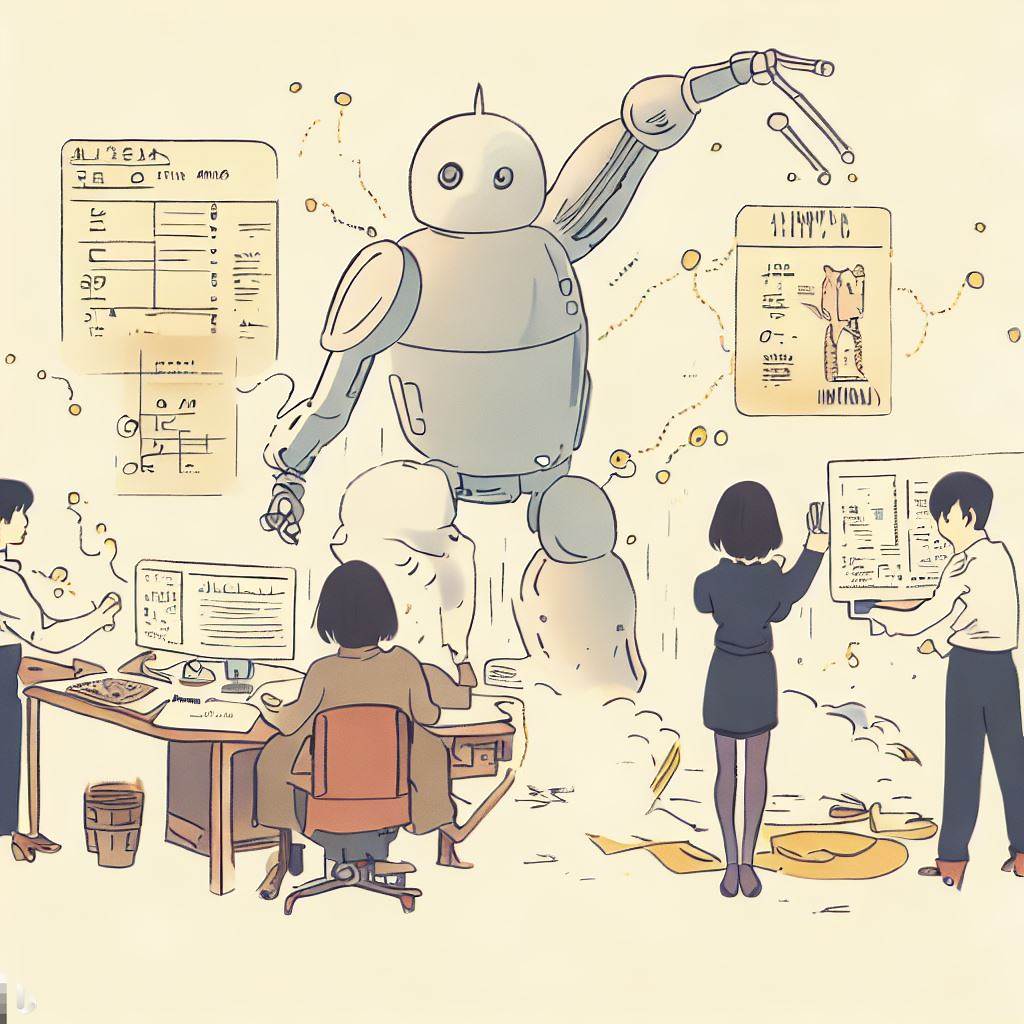
 πŸŽ„ We all love a great company Xmas feast, looking back on the highlights of the year, enjoying tasty food and fun games. But it can be a hassle arranging it πŸ˜“.


πŸŽ“ Why not take this as an opportunity to explore generative AI (e.g., ChatGPT/Bing/Bard)?

WHY?
πŸ“Œ It’s a boxed project that steers the exploration towards a clear goal
πŸ“Œ Minor (or no) security risks
πŸ“Œ Uses capabilities that AI masters quite well, such as creativity and image generation. Giving a positive impression.
πŸ“Œ The outcome is (very) important, but a failure will (most likely) not kill your business πŸ˜‰

HOW?
πŸ“† Book an all-hands 3-hour pre-Xmas workshop:

1️⃣ Start with an AI inspirational talk and a quick tutorial. Hire externally or let the AI geek of your company shine 🌟.

πŸ‘₯ Divide into small groups tasked to create a Xmas feast plan and invitation card, set some constraints for:
▶ Budget
▶ Location
▶ Elements that must be included, e.g., fun games, food, drinks or whatever.
▶ …

🀝 Let the teams work through it using AI help

πŸ—³️ Cast votes on the invitation cards

πŸ“ Follow through on the plans and continue exploring AI.

---

πŸ”₯ Are you up for the challenge?

πŸ“Έ If you do it, please share a photo from the festivity with me.

Unlocking focus with AI

 AI Helps Lower the Barriers, Giving Us the Opportunity to Focus on What We Like


Recently, I had the opportunity to meet up with Anders Γ–hrn, an entrepreneur with 20+ years of experience in data science and AI, as well as building amazing startups around the globe. Inspiring, to say the least 🀩

It's often said that the best ideas come from people who switch domains. When experts from one field enter a new one, they provide a fresh perspective that can lead to fruitful ideas. However, to provide relevant ideas you must lift your knowledge to a base level, which is easier said than done πŸ₯΅

Anders showed me his early prototype solution for this problem, leveraging AI and access to open data to optimize your learning πŸš€ πŸŽ“

Acquiring new knowledge can also be a necessary but unwanted distraction from your main work. Especially for startups, there are many tasks you either have to wing or hire expensive consultants for—such as contracts, GDPR, taxation rules, and so on. Worrying about all of this can keep even the best ideas from becoming a reality.

Thanks to advancements in generative AI and people like Anders, barriers are lowered, and more great ideas can be realized for our benefit πŸ₯³

Amazing.

Has generative AI empowered you in any way?

Monday, August 14, 2023

Will AI take our jobs?

Let’s try to untangle this controversial subject and speculate about the future of work.


As a starting point we can look at the words of two great thinkers:


AI will take all our jobs and few new ones will be created

Susskind, D. (2020). A World Without Work: Technology, Automation, and How We Should Respond. Metropolitan Books

AI is redefining “routine” tasks and taking over both manual and cognitive jobs, posing a risk to up to half of all jobs; while it can create unforeseen tasks and jobs, there’s no guarantee of sufficient job replacement, necessitating a revamp in education and training to focus on fostering creativity, emotional intelligence, and lifelong learning.

AI will take current jobs but create better new ones

Marc Andreessen: Future of the Internet, Technology, and AI | Lex Fridman Podcast

The introduction of AI may cause job turnover, but it ultimately leads to more jobs and higher wages, as AI-driven efficiencies lower prices and spur new demand, creating new enterprises; however, there’s a need for individuals to adapt and acquire new skills, often aided by AI, to thrive in these changing circumstances.

The billion-dollar question is of course whether AI will create more jobs that it takes. I will refrain from taking a stance here, but instead focus on the arguments Susskind and Andreessen have in common and what you can do to improve your chances in both scenarios.


AI will take over tasks, not jobs

Your job consists of several tasks and the AI automation process targets tasks not the full job.

AI will start automating tasks that are repetitive, predictable, and require low cognitive engagement. But it will not stop there, we already today see AI taking on tasks that need creativity, problem-solving and considerable cognitive engagement, like data analysis, report writing and generating photos/illustrations (AI pretty good with creativity see Automating creativity — by Ethan Mollick — One Useful Thing).

Leaving social interaction and deep thinking to us humans. As AI advances, it will automate more advanced tasks, leading to changes in job-roles. We already see how e.g., Microsoft is trying to improve AI capability for social interaction to another level with project Rumi (Project Rumi — Microsoft Research)


What about my job?

  • If your job consists of a few similar tasks, then your entire role is likely to be automated by AI in the near future.
  • If your job involves a variety of different tasks and social interactions, then your role is likely to continue existing, but being re-defined since AI will take over much of your routine tasks. Note: today, writing a report is considered a routine task!

A full day of deep thinking?

The complex stuff, deep thinking, is left to us humans — this is a different beast compared to tackling routine tasks.

Our capacity for deep thinking is limited, doing cognitively “easy” tasks makes it possible for us to do 8–10 hour work days. In a future where AI assists us with all the easy tasks, our workday must be optimized for deep thinking and look quite different.

Deep thinkers such as Yuval Harari and Warren Buffet are known for spending a lot of time meditating and reading. I’m not sure if my manager would be happy with me spending 4 hours meditating and reading each workday…But our brains are not wired for 8 hours of constant complex thoughts.

We must throw away many of the current conceptions when structuring the new workdays, if we do it the right way, the future might turn out bright.


Start preparing now!

It’s crucial now, more than ever, for us to set the strategy and tactics for:

  • Embracing Lifelong Learning: We must spend more time studying for each unit of output, each day is a day for learning.
  • Developing Non-Automatable Skills: Skills like critical thinking, creativity, and emotional intelligence. The term non-automatable skills are highly dynamic and we must be agile.
  • Adapt and Be Flexible: The work landscape is changing, and we need to be prepared and open to change. This might mean changing our career paths or adopting new ways of working.

Conclusion

Will there be work for everyone? There will be fewer “easy” tasks to perform, forcing us to re-define jobs. AI won’t steal our jobs, but it will change them, requiring us to adapt and evolve more and quicker. We have a big chance of turning this into something positive for all of us.

Thursday, August 3, 2023

Current status of AI in project management

Project management is complex, it will not be solved by AI in a big bang, but instead in several task level improvements. You will have AI drafting the project plan saving you 30% of the work, you suddenly realize that note taking, and distribution of action items is automatic now, and so on. In this way AI will transform much of the knowledge work as we know it today, task by task.

How will this happen? What can AI assist with? How to start?


I took a deep dive in the current understanding on how AI will transform project management.

Let’s start by looking which AI capabilities making it suitable for project management:

  1. Data analysis: AI can analyze large amounts of data quickly, opening up for improved forecasting of timelines, budget, resource allocation, potential risks, and even project success probabilities. As long as the data is available.
  2. Automation of repetitive tasks: AI is perfect for automating repetitive and time-consuming tasks such as data entry, schedule updates, and progress reporting. This will also help reducing human errors.
  3. Create and summarize text: AI is great at text generation and can be used for creating draft project documentation, assisting with communication and understanding complex contracts. This might be the first thing to try.


Leveraging these capabilities will improve the efficiency, leading to less project management overhead with improved quality. Looking at the project triangle we usually say this is impossible: lower cost, shorter project time and higher quality. Great promises.

But there are some obstacles to overcome…

Challenges of AI in Project Management:

  1. Resistance to Adoption: There might be resistance to embracing AI among project managers and members, it could be seen as a threat not an opportunity. Also, for companies to take the IT investment, up-skilling and adopting processes, will require giving it high priority.
  2. Data Privacy and Security: With increasing AI reliance, ensuring the safety of project data processed by AI is crucial. If not solved, this will block roll out.
  3. Risk of Over-Automation: There's a potential risk of over-relying on AI and overlooking human insight and judgement. This will be a dynamic challenge since the sweet spot between human or an AI will change as AI improves its capabilities.
  4. Integration Issues: Seamlessly integrating AI tools with existing project management methods and systems can be technically challenging, especially giving access to company data.

Change mangers will have a busy time moving forward πŸ₯³

How to get started?

First of all, start now. As Prof. Ethan Mollick suggests in a worklab podcast, take “the top 20 percent most creative people in your company, require they all use AI for a week, and give a million-dollar prize to whoever comes up with the best way to automate parts of their job while promising you’re not going to fire anyone as a result of this.”

That is, work from the ground up, put the tools in the hands of the users (project managers) and let them tinker, explore and share learnings.


You can start now without any risk and at an exceptionally low cost…

Microsoft Bing Chat Enterprise is a safe and solid way to get started, it gives you access to an AI-powered chat (GPT-4) with high Microsoft standards for data protection. This can be used for text-based tasks, such as drafting reports and streamlining communication.

Or set up a “AI-lab” with computers outside your IT infrastructure only allowing to use publicly available data. This will open for hundreds of tools. I would suggest keeping it simple and go for a ChatGPT Plus subscription, this gives access to plug-ins and the code-interpreter which can be used for working with data. Create business cases and go for a full-scale implementation if it looks good.

If you want to - go all in and fine tune your own language model.

When including your company data into the language model it opens a whole other level of benefits. For example, you could ask it to summarize the lesson learned from all similar projects into guidelines for the current project or create a project plan based on previous work and have it writing it according to the company language guidelines.

This is much more advanced and expensive compared to using pre-trained models, such as Google Bard, ChatGPT or Llama 2.

One way to explore including own data in the language models might be reaching out to service providers such as Sanalabs or Glean.


How to learn more

For learning more about how to leverage AI for project management check out:

  • Ricardo Vargas offers insightful courses such as the AI-Driven Project Management Masterclass and additional content on LinkedIn.
  • Peter Taylor has written multiple books on this topic.
  • Michael Kaplan, explores these topics and shares his findings on LinkedIn.

Have you started using generative AI for your professional work yet? which tasks does it help with? I’m curious to hear what you have been up to πŸ˜ƒ

Wednesday, August 2, 2023

Generative AI: My hopes for the Rest of 2023

 I’m gearing up for an exciting autumn as work resumes post summer break! Last year, Generative AI hit the public sphere and has been gaining momentum ever since. The tempo is furious.

A lot of push

Big tech companies like Microsoft, Google, Facebook, and Apple are investing heavily in generative AI, each with unique strategies. This push will result in broader adoption of generative AI, it you will hopefully encounter it this fall. In parallel, we're also seeing the major management firms providing strategy guides for AI, indicating a strategic shift.


With this backdrop, the autumn will be something extra!

Here's what I'm excited about for the rest of 2023:

1. AI from Non-Techies: I look forward to understanding how AI is explored and implemented by non-tech professionals. How are HR, line managers, CFOs, and even philosophers thinking about and leveraging this technology? More use-cases and less foundational model comparisons.

2. Enterprise adoption: Will we see broad enterprise adoption of generative? We already have an enterprise version of BingChat and a price tag on M365 Copilot. Will there be an explosion of enterprise solutions hitting the market? What are the consequence in terms of:

Productivity Boost: How is AI affecting productivity across different sectors? What are the concrete use cases, and time savings? How do we spend that “extra time”?

Job Market Response: What is the response to automation? Will we see a flood of new jobs already now or will there be a gap? A recent Netflix job posting for a machine learning platform product manager shows the role AI will play in content creation, likely reducing the need for human writers. How will such changes impact the job market?

AI-Integrated Business Processes: Are we going to see business processes, such as project management, being redesigned with generative AI at their core? How will a day for a project manager look like if 50% of the management is handled by AI

Up-skilling: How to train millions of employees to leverage the tools?


3. AI solving global problems: How is AI solving engineering problems? If AlphaGo could surprise a whole world by the “37th move”, could AI surprise us by new solutions to engineering problems?

Climate Change: How is AI helping us to win the fight against global warming? What are the concrete examples of AI-generated ideas helping combat climate change?

Cure for diseases: We have seen Alphafold starting to be used in protein research, but what else is happening in the life-science space?

Lot’s of questions, and hopefully lot’s of answers in the months to come. Excited for the journey!

What are you most excited for?

Monday, July 3, 2023

AI: The Game Changer We Can't Ignore

I recently listened to podcast from Microsoft Worklab, with Ethan Mollick, a professor at The Wharton School who's is known for e.g. integrating AI into his curriculum since early 2023 and for his Substack "One Useful Thing" where he translate academic research into useful business insights.


A few key ideas that stood out:
1️⃣ AI is Transformative and Here to Stay: AI isn't just another tech trend. It's a general-purpose technology impacting every aspect of our lives, even if all AI development stopped today.
2️⃣ Working with AI: Imagine AI as a collaborator not as a google search box. It’s an entity that can help you refine drafts, suggest improvements, or lend a more formal tone to your language. The biggest AI use cases could well be in writing documents and conducting research, promising significant productivity gains. What does it mean for you and your organisation?
3️⃣ A Task-level Revolution: AI will not replace jobs - but tasks. Jobs are bundles of tasks, and AI is perfectly suited to take over some of these tasks. The shift isn't necessarily at the job level; it's more about changing how we handle tasks.
4️⃣ Work will change: Large corporations with lots of layers of middle management are built on the technologies and capabilities we have today. That will change since we have different capabilities now. Are you still going to do sprints as the way of organizing work? When AI can structure your work. We have to change how we work, which will be huge.

πŸš€ And a few ways to get the ball rolling!

1️⃣ Start Small and Encourage Experimentation: Begin with integrating AI into manageable tasks. This could be as simple as automating email responses or scheduling meetings. It's crucial to foster an environment that encourages experimentation with AI.
2️⃣ Time and Training: Understanding and effectively using AI requires time and training. A rough estimate is around 10 hours of hands-on experience before gaining real value from AI.
3️⃣ Inclusivity in Adoption: As we integrate AI into our organizations, it's crucial to ensure that adoption is inclusive and beneficial for all employees. This might mean providing additional support for those less tech-savvy or ensuring that AI tools are accessible to all.

πŸ’š AI's future in our workplaces isn't just about the technology; it's about people, processes, and potential. What are your thoughts on this? and how do you plan to integrate AI into your workflow? I'd love to hear from you.

πŸ₯³ A final challange
Mollick suggests an interesting idea: motivate your most creative people to use AI for a week and reward the best automation idea. This challenge could inspire new ways to leverage AI within your organization. Do you think that would make sense in your organisation?

Wednesday, April 26, 2023

Autonomous AI gives you autonomy

AI agents such as AutoGPT and AgentGPT, working autonomously towards goals you've set have recently gained attention.


Though AI acts autonomously, the key benefit is providing you more autonomy, e.g. say that you are planning a birthday party. You can decide to plan it all by yourself, delegate some tasks or the whole task to your AI birthday planner agent.

πŸ₯³ This is great because we (humans) like autonomy.

As a project manger, I often see proof of the power of autonomy. Assigning tasks to team members often yields half-hearted results. However, when the team members come up with the task themselves, they complete them in time with passion.

πŸ“š This is behavior well understood in the literature. Autonomy is a key to human motivation and well-being is described in the Self-Determination Theory. The theory states that we have three psychological needs that drive our motivation and well-being:

πŸ“Œ Autonomy: The need to feel in control of one's own actions and choices, and to act in harmony with one's values and interests.
πŸ“Œ Competence: The need to feel effective in one's activities and to experience mastery over challenges.
πŸ“Œ Relatedness: The need to feel connected and have a sense of belonging with others.

πŸ€– How can AI boost our motivation?
(1) Autonomy can be improved by AI-agents as described above. AI is also improving our perceived (2) competence - I can now write Python code and make art! (3) The impact on relatedness is less obvious to me and I’ll leave it out for now. But improving 2 out of 3 is amazing.

🌟 Following this lightweight reasoning, AI has the potential to increase our motivation and well-being. I like AI.

❓What do you think? Are AI agents here to stay? Do you think that AI will improve our engagement? What does AI mean for you?

Looking forward to seeing research studies within this field, if you have please ping me πŸ™‚

Wednesday, April 19, 2023

What AI future do we want to have? Lex, Max what do you say?

The exponentially growing number of AI related posts in my feed are 99% focused on tools and current development. The sentiment is positive. Bullish. Gold rush. I love it ❤️


For another perspective, I highly recommend the Lex Fridman podcast episode with the MIT professor Max Tegmark. In my opinion, Max is often drawn to the edges of problems (typical physicist mindset) and unafraid of big perspectives, listening to him sparks new thoughts in my head.
He has gained a lot of attention lately as one of the authors of the open letter urging for a 6-month pause in AI development, which is the major topic in the interview.

Max talks about our drive for improved efficiency, which has historically created wealth and automated away tedious and dangerous work—great! But now we have a tool that can automate jobs people find meaningful and enjoyable, how do we tackle that?

Should we optimize everything as much as possible? What are we optimizing towards? Efficiency? Our happiness and fulfillment? Or something else? Could we fail and steer towards a unwanted goal?

Do we need to pause and think?
That’s impossible!?

No, Max argues that we have successfully defined global guardrails before, e.g. for cloning of DNA, and it is possible to do again if we want to.

❓What should we do? AI-Pause? or go all-in-AI? What do you think?

πŸš€ This far, the ChatGPT revolution has been amazing for me. I feel empowered to take on new challenges since I have an assistant on my side. Awesome.

🌟 My dream scenario would be to leverage the AI assistant to remove tedious work, like helping me pay the parking ticket I just got 🀬, and empower me to do new things e.g., creating graphic illustrations, programming Python scripts, and becoming an better writer. However, there are also scenarios that don't sound that appealing, like optimizing away face-to-face interaction with my colleagues. Where are we heading?

I think everything Max says boils down to taking the situation into our own hands, and steering towards the best possible outcome while trying to avoid the unwanted scenarios. He suggests a pause, there might be other ways.

πŸ’‘To me, the 3-hour-long podcast episode served as a sobering break from the normal flow of information. But now, I'm ready to jump back into AI details, AI tools, and how to AI-optimize my work as a project leader — and sometimes pause, reflect, and adjust the direction.

❓What are your thoughts? Are you afraid of having your job automated away? Or do you feel AI-empowered ?

Thursday, April 6, 2023

✨ Co-everything is the future

🌟 Thank you Microsoft for an amazing day, packed with inspiration delivered by great speakers. To summarize my take-away with four words:


✨ Co-everything is the future.


πŸ’‘ One thought that kept coming back in my head is how organizations with full focus on their core business will find the energy to adopt and benefit from technologies that's being delivered at breakneck pace (monthly, weekly, daily)?


The gap will become enormous between those who "keep up" and those who don't, larger than before. If we look back, for example, at MS Word 6.0, released in 1993, and MS Word 97, which came four years later with new functionality like Clippy and the ability to draw pictures, one could get by quite well without learning the new features. Small gap.

πŸš€ Now, employees who adopt the new technology might increase productivity in daily work by 50%. Large gap. This gap must be bridged somehow!

πŸ”§ How do we solve this? Will it require huge change management efforts? Or will the new functionality be so streamlined and integrated that it's adopted automatically?

❓ Any examples of large organizations using a structure to educate employees that matches the current speed? What is the best practice?

🌱 Sustainability - one last thing I hope for is that sustainability metrics will be highlighted with the same importance as financial metrics, this is an incredibly inspiring perspective neatly packaged by Yalle Elehu.

Thanks, I'm eager to explore and help πŸ˜€

Wednesday, March 29, 2023

Can ChatGPT-4 Successfully Mimic My Writing Style? πŸ€”

πŸ§ͺ In a experiment, I wanted to test if ChatGPT-4 could mimic my writing style so effectively that my friends was unable to distinguish between my writing and ChatGPT's.


πŸ”Ž The Experiment
I began “training” ChatGPT to adopt my writing style by:
a. Providing it with some of my LinkedIn posts and having it analyze my style, and use as a basis for a prompt.
b. Tweaking the ChatGPT prompt on a sample text until the results matched my satisfaction.

I then used the prompt from above to have ChatGPT summarize an article in my writing style and shared the summary with a group of friends, asking them to estimate the probability (%) that the article summary was written by either me or ChatGPT.

πŸ“Š Results & Discussion - A Close Call
Out of the five who participated, three correctly identified that ChatGPT wrote the text. However, the average probability for me writing the text was 58%. Considering the motivations behind their responses, it seems to have been quite difficult to decide. If my friends have a 50% chance of picking up the correct author, what about a general audience? Probably much lower percentage...

🌐 Outlook - What does it mean? Well potentially a lot, here are three scenarios…

πŸ“Œ Boosting my LinkedIn presence: I could quite easily increase my presence at LinkedIN and push myself as knowledgable within a chosen topic, say space exploration. The process can even be self-playing by setting up a script to automatically select trendig articles within space exploration and have ChatGPT writing summaries and posting them. Then I can of-course add a few personal references if needed.

How much material is curated automatically or semi-automatically today?

πŸ“Œ Streamlining professional documentation: ChatGPT could draft all my project documents, saving me lot’s of time and potentially resulting in more accurate outcome. The “only” thing remaining is to bring GPT within the company walls - and we know that Microsoft, Google etc. are working on that now.

πŸ“Œ Enhancing email and presentation drafting: If ChatGPT had access to all my business data, which it will soon, I don’t see any issues with having much of my e-mails, presentations, meeting transcripts and such drafted by ChatGPT. It will do a much better job than I do since it can cover more sources than I can keep in my head, and can still give the feeling that I wrote it.
What will I loose by relying on this process? How will it change my workflows?

What are your thoughts? What impact do you foresee?

πŸ™‚I wrote this text myself using my ChatGPT-assistant to review, give constructive feedback and outline the prompt for the DALL-E generated illustration.